
ROV Fundamentals Course
IMCA Approved ROV Introductory Course
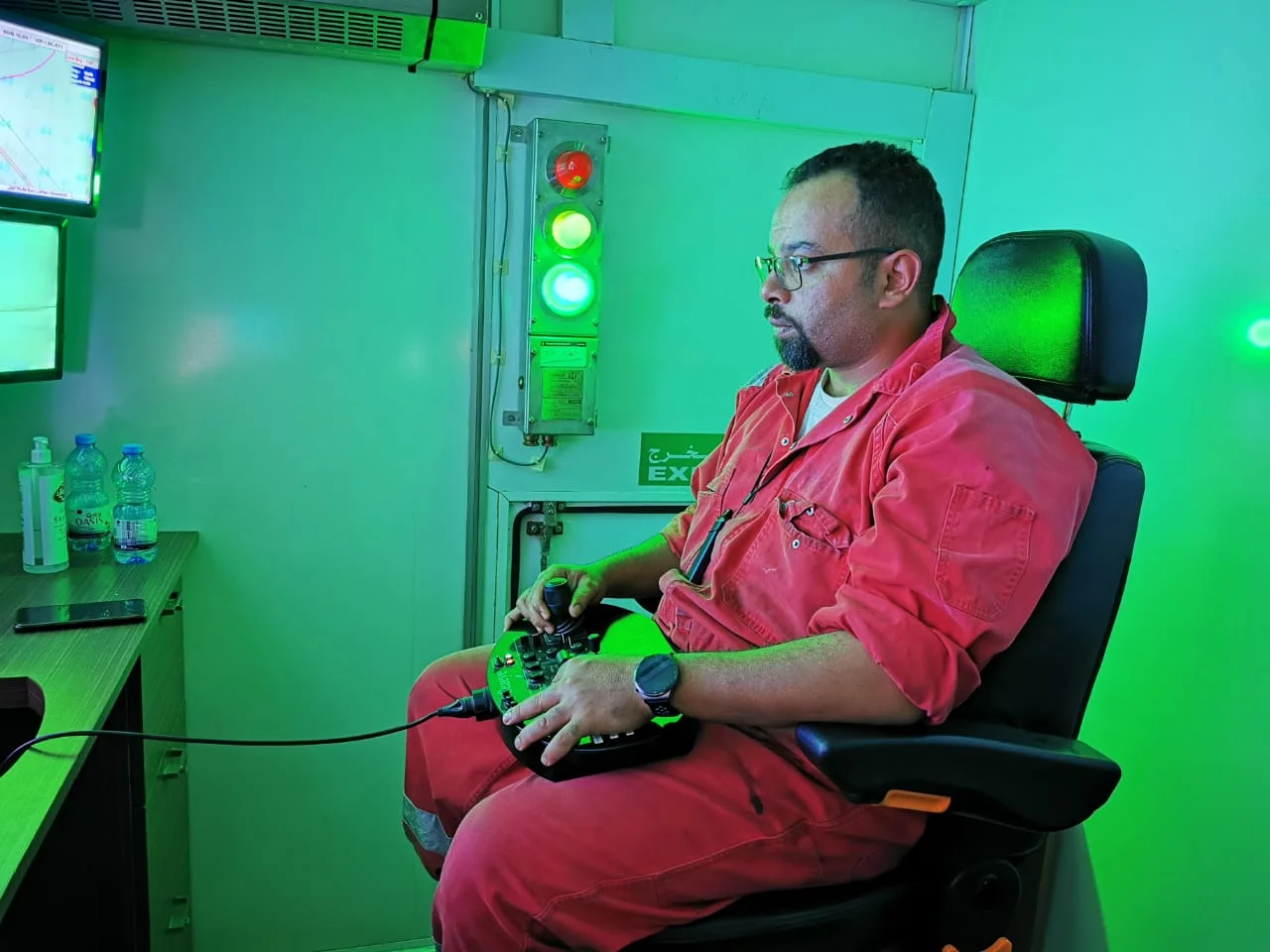

Become a Certified ROV Pilot with Exa-Blue Training Center: Unlock High-Value Offshore Career Opportunities Through Our IMCA-Aligned Subsea Training Programs.
At Exa-Blue Training Center, we are committed to operational excellence ensuring both individual trainees and corporate marine contractors operate Remotely Operated Vehicles (ROVs) with maximum safety, technical precision, and field efficiency.
Program Leadership & Assessment: Direct instruction and competence assessment conducted by an active Offshore ROV Superintendent (IMCA C005 – Job Category R20) and certified Competence Assessor (IMCA C007).
Why Choose Exa-Blue Training Center?
- Globally Verifiable 5-Certificate Package: Earn an IMCA R002-aligned main trainee certificate verifiable directly on the official central IMCA Trainee Portal (portal.imca-int.com), plus 4 specialized technical certificates in Electrical, Hydraulics, High Voltage Safety, and Fiber Optics.
- IMCA C005 & C001 Compliant Flight Simulation: Master critical subsea flight maneuvers, tether management, and sonar navigation using our state-of-the-art PaleBlue simulation suite. Practical simulator flight hours contribute directly toward candidate piloting logbook verification under IMCA C001 (Section 3.2) and IMCA C005.
- Hands-On Workshop & Diagnostic Mastery: Gain direct practical experience on fault-finding diagnostic rigs, hydraulic schematics, high-voltage safety isolation, and hot melt & fusion fiber optic splicing equipment.
- Senior Offshore Instruction: Learn directly from active Offshore ROV Superintendents (IMCA C005 – Job Category R20) who bridge theoretical engineering principles with real-world deepwater intervention workflows.
- Official IMCA Logbook Sign-Off: Graduates receive an official IMCA ROV Personnel Logbook with initial competency milestones verified onsite by qualified workplace assessors in accordance with IMCA C007 guidelines.
Elevate your professional standing and enter the subsea industry with credentials that command immediate respect from offshore vessel contractors and recruitment managers.
ABOUT THE COURSE
Master the Depths: Experience an industry-leading ROV Introductory Course that prioritizes depth and engagement. Our multi-modal approach combining rich text, video, and detailed illustrations ensures a thorough understanding of subsea operations.
We believe in quality over quantity. By maintaining a strict 4:1 student-to-instructor ratio, we guarantee the personalized attention necessary to master complex concepts. Under the constant supervision of expert instructors, you will gain the knowledge and confidence required to excel in your certification exam.
The course is for individuals who are new to the ROV industry and are looking to pursue a career as ROV pilots or technicians.
In line with IMCA R002 guide line Trainees should meet one or more of the following requirements:
1) A nationally-recognised technical or trade qualification (military service qualification and/or an appropriate level national vocational qualification is acceptable) completed in one or more of the following subjects:
a) Electrical;
b) Electronic;
c) Hydraulics;
d) Mechanics.
and a minimum of three years’ technically relevant industrial experience (including any accepted training period) in an appropriate discipline relating to the above subjects, which should have been obtained within the previous four years;
2) A nationally-recognised, higher (tertiary) academic qualification (not otherwise covered above) in a relevant technical subject; plus a minimum of one year of technically relevant industrial experience, which can be secured as a feature of the entry into the ROV industry, i.e. a university graduate may go directly to a suitable establishment to secure the minimum of one year of relevant industrial experience, which may be with the employer;
3) In certain circumstances, candidates who do not meet the criteria above but have extensive industrial experience, or an appropriate technical qualification or industrial training course supported by evidence and references, may be acceptable.
The possess of good english communication skills both oral and written is mandatory as the course is completely in English.
In line with IMCA R002 guide line
- Heath, safety, environment, and quality (HSEQ):
− Awareness of the offshore industry codes of practice, legislation, and guidelines;
− Understanding of requirements for travelling to offshore sites by helicopter;
− Understanding of safety culture in the offshore industry;
− Electrical safety awareness and understanding of electrical isolations including lock out/tag out systems;
− Understanding the dangers of high energy systems (electrical, pneumatic, or hydraulic) and associated good safety awareness;
− Confidence to carry out task risk assessments (TRA) and toolbox talks (TBT) to company requirements. - Industry:
− Understanding of the oil and gas industry;
− Understanding of ROV business lines and associated requirements;
− Awareness of offshore life on various offshore worksites/vessels;
− Awareness of the offshore working environment of and the importance of teamwork. - Operations:
− Awareness of a trainee’s duties and their role in the ROV crew;
− Understanding of launch and recovery systems (LARS) and awareness of risks;
− Basic ROV piloting skills including navigation, station keeping, tracking, close visual inspection, and tether management;
− Understanding of all appropriate documentation;
− Recognition of ROV system components;
− Awareness of company integrated management system (IMS);
− Awareness of contractual terms and operational impacts;
− Understanding of the importance of good communication;
− Understanding of ‘competence’.
- Written multichoice tests.
At least 80% of the questions have to be answered correctly to pass the exam
Upon successful completion of all theoretical examinations and practical simulator/lab assessments, candidates receive the following official credentials:
• Exa-Blue Certificate of Completion: ROV Pilot/Technician Introductory Course
• Official IMCA ROV Personnel LogbookDUAL CERTIFICATE VERIFICATION GUARANTEE:
1. Official IMCA Portal Verification:
Exa-Blue submits graduate completion data directly to the central International Marine Contractors Association (IMCA) database. Employers and offshore recruiters can officially verify your course certificate directly on the official IMCA portal at:
https://portal.imca-int.com/certification/verify-trainee/2. Exa-Blue Online Verification Portal:
Credentials can also be instantly authenticated at any time using the “CHECK YOUR CERTIFICATE” portal located in the header of www.exa-blue.com.Holding this verified credential confirms that the graduate has fulfilled all entry-level training criteria structured in full accordance with IMCA R002 guidelines and IMCA C005 (Job Category R04) standards.
The course fee is fully inclusive of all required training, study materials, practical equipment access, and certification fees:
COURSE DELIVERABLES & SERVICES:
• Full Access to All Training Sessions: Complete access to theoretical lectures, PaleBlue simulator flight hours, and hands-on laboratory exercises.
• Comprehensive Course Materials: Official training manuals, technical study guides, and digital reference resources.
• Official IMCA ROV Personnel Logbook: Registered and signed off by IMCA C007-qualified assessors.
• Personal Protective Equipment (PPE): Standard workshop PPE provided for practical sessions (candidates must bring their own safety boots).
• Practical Equipment & Toolkits: Full access to diagnostic equipment, specialized toolkits, NI Multisim testing rigs, and fiber optic splicing units.
• Comprehensive Onsite Coverage: Trainee insurance coverage throughout the duration of the course.
• Trainee Support Services: Career counseling, CV preparation, administrative assistance, and logistical support.
• Hospitality: Complimentary refreshments and soft drinks on all training days.
INCLUDED CERTIFICATION PACKAGE (5 CERTIFICATES):
1. Main Certificate: ROV Pilot/Technician Introductory Course (IMCA R002 Aligned)
→ Officially verifiable on BOTH the Central IMCA Portal (portal.imca-int.com) and Exa-Blue’s Portal.
2. Specialized Technical Certificates:
• Certificate of Completion: Introduction to Offshore Electrical & Electronic Systems
• Certificate of Completion: Introduction to Subsea Hydraulic Systems
• Safety Certificate: High Voltage (HV) Practice & Safe Isolation
• Technical Skills Certificate: Fiber Optic Termination & Splicing (Hot Melt & Fusion)
→ Officially verifiable EXCLUSIVELY on the Exa-Blue Portal (www.exa-blue.com).
Note: Travel, hotel accommodation, and daily subsistence expenses are not included in the course fee.
25 Days
From Saturday to thrusday from 09:00 to 17:00
ROV TRAINING & CAREER: FAQ
- No. This course is designed to provide only an entry level of knowledge and initial skills.
- Competence is industry-led and can only be attained through supervised operational workplace experience within an employing company.
- Completion of training represents only the entry stage of your development.
- No. Completion of an IMCA recognized ROV course does not, in itself, secure employment.
- Operating companies retain full discretion over all recruitment decisions.
- IMCA does not recommend or nominate specific individuals for employer placements.
- Progression from Trainee to Pilot Technician II (PT II) requires demonstrable competence gained offshore.
- This includes participation in live dives, maintenance activities, fault-finding, and supervised task execution.
- These opportunities for progression can only be provided by operating companies, not by training centers.
- Feedback indicates that personnel with low flying hours may be perceived by employers as a commercial or operational risk.
- Furthermore, entry-level offshore positions are often unpaid by the end client.
- This means the company hiring you must personally burden the cost of your position and training for the first few trips.
- Investment in this career includes significant additional expenses.
- You must account for the costs of medicals, offshore safety certifications, and other readiness requirements.
- Prospective trainees should consider these financial exposures carefully before committing to training.
- Existing academic qualifications or experience from other safety-critical or engineering sectors may not be automatically recognized.
- You may need to seek approval of your qualifications prior to entering training to confirm if your prior experience is accepted within the ROV competence framework.
- Early Engagement: Contact operating companies and recruitment agencies as early as possible to understand market conditions.
- Logbook Management: Familiarize yourself with the IMCA competence framework and actively manage your IMCA logbook and task evidence.
- Networking: Use industry platforms and events to maintain visibility and learn about vacancies or mobilization requirements.
- Training vs. Competence Distinction
- Entry-Level Only: Completion of this IMCA-recognized course provides an introductory level of knowledge and initial skills only.
- Definition of Competence: Formal training does not constitute competence. Competence is industry-led and is only achieved through supervised operational workplace experience within an employing company.
- Certification Limits: Upon successful completion, you will receive a certificate for an Introductory ROV Trainee Technician course. This center cannot certify you as a Pilot/Technician Grade II (PT II); that status requires offshore operational exposure including dives and maintenance.
- Employment and Market Realities
- No Guarantee of Work: Completion of this course does not secure employment or guarantee offshore assignments.
- Recruitment Discretion: Operating companies and recruitment agencies retain full discretion over hiring; IMCA does not nominate specific individuals for placement.
- Commercial Risk: New trainees with low flying hours may be perceived by employers as a commercial or operational risk.
- Unpaid Entry Roles: It is common for entry-level offshore positions to be unpaid by the end client, meaning the employing company must bear the cost of your training onboard for the first few trips.
- Financial Exposure & Career Planning
- Additional Costs: Beyond training fees, you are responsible for the significant costs of medicals, offshore safety certifications, and readiness requirements.
- Career Stagnation: Without securing a position with an operating company to gain supervised experience, you may experience prolonged stagnation at the entry level.
- Prior Experience: Qualifications from other engineering or safety-critical sectors are not automatically recognized and may require prior approval.
- Trainee Responsibilities for Progression
- Logbook Management: You are responsible for actively managing your IMCA logbook, task evidence, and assessments to ensure your operational exposure is properly recorded.
- Early Engagement: You are encouraged to engage with operating companies and recruitment agencies as early as possible—even during training—to understand market conditions.
- Professional Networking: Maintaining visibility through industry platforms and events is a recognized way to identify vacancies and mobilization requirements.
Course Upcoming Schedule
Our comprehensive course schedule is designed to provide a clear and intuitive overview of our upcoming professional training offerings. We understand that effective planning is essential for your academic and professional development; therefore, this resource is crafted to support your informed decision-making and career growth.
Contact us today to secure your slot for our upcoming courses.
31 Jan 2026 to 25 Feb 2026 | 08:00 Am – 17:00 Pm
Closed 2/4 | 0 Slots Left
13 Jun 2026 to 08 Jul 2026 | 08:00 Am – 17:00 Pm
Closed 2/4 | 0 Slots Left
18 Jul 2026 to 08 Aug 2026 | 08:00 Am – 17:00 Pm
Closed 2/4 | 0 Slots Left
01 Nov 2026 to 25 Nov 2026 | 08:00 Am – 17:00 Pm
Open 3/4 | 1 Slots Left